
Why Iran Must Fall – Part 2: No Peace at Any Cost
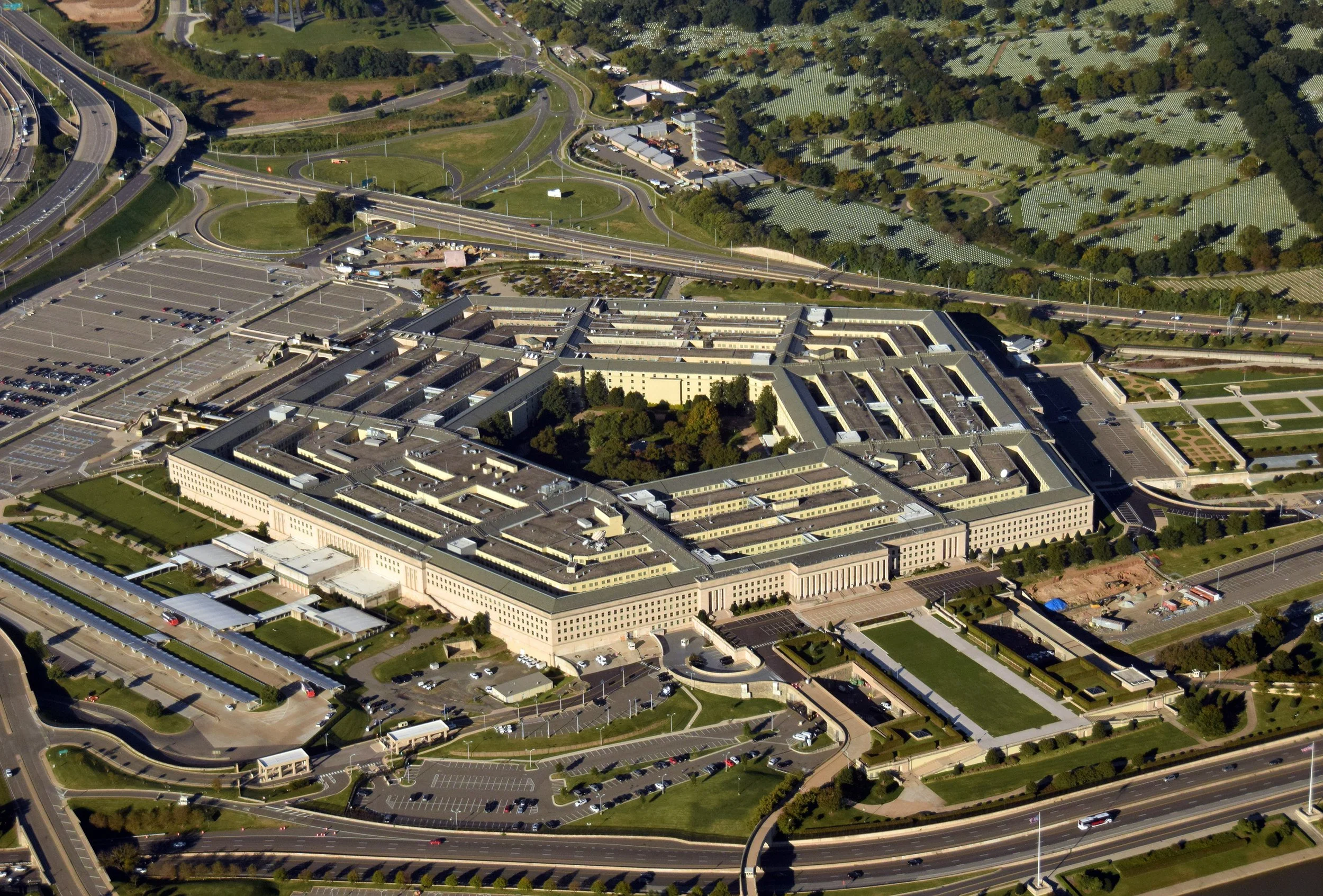
U.S. Department of War – The Pentagon
In Why Iran Must Fall – Part 1: The Villain the West Loves to Hate, we looked at the other side of the story—the one beyond the caricatures of a nation that hates us because of our “freedoms."
In 1953, Washington orchestrated a coup that overthrew Iran's elected Prime Minister, a man whose mandate was to nationalize Iran's resources that had been plundered by the British for more than 50 years. In his place, the CIA restored the Shah—Iran's king—to power. For 26 years, the Shah ruled as a U.S.-backed dictator who tortured dissidents, spent billions on U.S. weapons, and handed Iran's oil to Western corporations.
When Iranians overthrew him in 1979, they severed America's control over a strategic prize: Iran's oil, U.S. military bases on Iranian soil, Iran's position as the pillar of U.S. dominance in the Persian Gulf, and Iran's role as a bulwark against Soviet influence. The revolution also shattered Israel's most important regional alliance. Under the Shah, Iran and Israel had maintained close military and intelligence cooperation against Arab states and Soviet influence. The new Islamic Republic declared opposition to Western imperialism and Zionism as a pillar of its foreign policy. It cut all ties with Israel and began supporting Palestinian resistance movements. For Tel Aviv, losing Iran meant losing a strategic partner and gaining a committed adversary.
Washington's response was immediate and relentless. It backed Saddam Hussein during the Iran-Iraq War even as he gassed Iranian soldiers and civilians. It shot down a civilian Iranian airliner, killing 290 people. It imposed crippling economic sanctions that have hurt the working class for over four decades.
The covert war ran parallel. Scientists, military commanders, and political leaders were assassinated. Nuclear facilities were hit with cyberattacks. In 2025, Israel launched large-scale strikes on Iranian nuclear, military, and civilian sites, publicly framing them as preemptive self-defense against an allegedly imminent Iranian nuclear threat. Let's be clear: they were unprovoked and illegal acts of war. For 46 years, Israel and the United States have violated Iran's sovereignty.
But what if, despite that history and Iran's authoritarian system, Tehran tried peace anyway? Would Washington and Israel reciprocate? This is what we will examine in Why Iran Must Fall, Part II – No Peace at Any Cost.
Unanswered Calls for Peace
In 1997, 80 percent of Iranians voted. Seventy percent backed reformist Mohammad Khatami, a champion of openness and civil society. His victory energized debate. The regime loosened its grip. Over 700 new publications launched in two years.
Months after his landslide victory, Khatami reached out to Washington with a call for a "dialogue of civilizations." He promoted cultural and academic exchange. In a televised interview with journalist Christiane Amanpour, he addressed the American public directly: "We are looking for a world in which misunderstandings can be overcome, nations can understand one another, and mutual respect and logic govern relations among states. It is the right of every nation to stand on its principles and values and have the expectation of respect and dignity from others." Washington did not reciprocate. Clinton-era sanctions remained. New executive orders tightened them.
September 11
After September 11, 2001, Khatami’s administration sent condolences to the United States while Iranian citizens held candlelight vigils in Tehran's streets. Tehran also joined Washington in secret to cooperate against the Taliban and to help form a new Afghan government. Despite these openings, in January 2002, President George W. Bush included Iran in his "Axis of Evil," alongside Iraq and North Korea. Iran's response was immediate: it terminated the secret meetings with American officials hunting al-Qaeda and Taliban forces.
In March 2003, the U.S. invaded Iraq. Neoconservatives in Washington began pushing for Iran next—openly discussing regime change and preemptive strikes on nuclear facilities.
The Grand Bargain
In May 2003, Iran submitted a far-reaching offer to the U.S. State Department via the Swiss Embassy, a "Grand Bargain." The secret two-page proposal addressed the major issues Washington publicly claimed to care about. Tehran signaled acceptance of the 2002 Arab League Peace Initiative, which offered full normalization of all Arab states with Israel in exchange for an independent Palestinian state and a just resolution to the refugee issue.
Iran also offered to end material support for Hamas and Islamic Jihad, to pressure Hezbollah to transition into a purely political party, and to accept nuclear transparency exceeding International Atomic Energy Agency requirements. In return, Tehran sought sanctions relief, security guarantees, an end to U.S. hostility, and recognition of its sovereignty and regional role. The offer directly contradicted the Bush administration's claim that Iran was committed to Israel's destruction and regional terrorism.
Washington did not entertain the offer. In fact, Flynt Leverett, then senior Middle East specialist on the National Security Council staff, recalled in an interview with Inter Press Service that within days of receiving the proposal, the Bush administration sent a message to the Swiss ambassador expressing displeasure that he had forwarded it to Washington.
In other words, George W. Bush, Condoleezza Rice & company snubbed a diplomatic opening that could have delivered peace, preferring instead to beat the drums of war.
JCPOA
In 2015—after decades of crippling Western sanctions—Iran signed the Joint Comprehensive Plan of Action (JCPOA) with the U.S., U.K., France, Russia, China, Germany, and the EU.
The deal imposed strict limits on a nuclear program Iran insisted was entirely peaceful. Nuclear proliferation was in fact explicitly illegal in Iran. In 2003, Supreme Leader Ali Khamenei issued a fatwa—a legal ruling in Islamic law—declaring nuclear weapons forbidden. Their indiscriminate slaughter of civilians violates both Islamic law and the word of God. Critics claim the fatwa is nonbinding or reversible, yet Iran has never developed a nuclear weapon. U.S. intelligence and the International Atomic Energy Agency (IAEA) have confirmed this repeatedly.
By the time the JCPOA was signed in 2015, Iran was conducting civilian nuclear research and uranium enrichment consistent with international norms for peaceful energy and scientific purposes. Most enrichment was at just 3–5 percent, the standard fuel for civilian power plants. A smaller share reached about 20 percent for the Tehran Research Reactor, which produces medical isotopes for cancer treatment. Neither level could make a bomb; weaponization requires enrichment above 90 percent. In this respect, Iran's program resembled those of other non-nuclear states pursuing civilian energy and research—countries like Brazil, Argentina, Germany, and Canada.
Netanyahu and the pro-Israel lobby in Washington denounced the accord from the outset. Neocons like John Bolton called it “the worst act of appeasement in American history." By 2018, Trump obliged. He tore down the deal not because it had failed—the IAEA repeatedly confirmed Iran's compliance—but because it had succeeded, and very likely because it bore Obama's signature.
But success, it turned out, was precisely the problem. It stripped Washington of its central excuse for treating Iran as a foe, weakened the military-industrial complex's argument for permanent war, and undercut Netanyahu’s claim that Iran was an existential threat. Trump responded by reimposing crushing sanctions and slamming shut the narrow window for reconciliation the deal had opened.
JCPOA 2.0
Since Washington's withdrawal from the JCPOA in 2018, Iran enriched about 4 to 5 percent of its uranium stockpile to 60 percent—still well below the 90 percent threshold required for weapons-grade material and with no delivery system capable of launching a nuclear strike. This limited enrichment was not a dash for a bomb but a source of leverage—a bargaining chip for negotiations with Trump.
This was confirmed in March 2025, when Director of National Intelligence Tulsi Gabbard testified before Congress: "The IC [intelligence community] continues to assess that Iran is not building a nuclear weapon and Supreme Leader Khamenei has not authorized the nuclear weapons program he suspended in 2003."
Whether driven by Iran's token enrichment or President Trump's hunger to crown himself the greatest dealmaker in history, Washington returned to the table with Tehran in early 2025 for a "JCPOA 2.0." In Tehran, hopes flickered that this diplomacy might finally bring security and an end to sanctions.
Then, in May 2025, just as negotiations were gaining momentum, the International Atomic Energy Agency released a report declaring Tehran non-compliant for the first time in two decades. Iran denounced the findings as "fabricated Israeli intelligence." Within days—exactly two days before the sixth round of U.S.-Iran negotiations was set to begin—Israel launched devastating strikes on Iran, obliterating any chance for a potential agreement, and starting the Twelve-Day war.
The assault killed dozens of Iranian military commanders and nuclear scientists, along with their families, while destroying critical infrastructure. 12 days later almost 1,200 Iranians had been killed. The carnage ended not only the negotiations but also Iran's cooperation with the IAEA, which Tehran now viewed as compromised beyond repair. Tehran accused the IAEA of sharing confidential information, including the identities of nuclear scientists, with Israeli intelligence—allegations that, if true, would explain the precision of Israel's targeting.
After the bloodshed, Director-General Rafael Grossi—the author of the report—tried to walk it back, denying that the report was meant as a pretext for war and insisting that verification, not military action, should guide responses. But the damage was irreversible. Israel had manufactured its justification for war and turned the supposed guardian of nonproliferation into a weapon of war.
Former UN weapons inspector Scott Ritter didn't mince his words when speaking about Grossi’s responsibility for the start of the war:
"When you have the Director General of the IAEA collaborating with Israel and the United States, meeting with Israel—Israel is not a signatory to the Nuclear Nonproliferation Treaty. Israel has a nuclear weapons program that operates outside the framework of this treaty. There's no reason why the IAEA Director General is meeting with Israel, other than to pass intelligence information that was used by the Israelis to target Iranian sites […] So Iran cannot continue to work with the IAEA as it's currently configured, as it's currently led. And I think Iran has every right to demand Grossi's resignation and a reconfiguration of the safeguards team and the safeguards agreement, before they can get into the business of saying, okay, we're ready to resume our relationship."
At first, Washington tried to distance itself from what it called Israel's "preemptive" act of war. Senator Marco Rubio insisted the strike was Israel's alone, with no American involvement. But Trump quickly praised it as "excellent" and "very successful," boasting that it fulfilled his ultimatum to Tehran—though no such ultimatum had been publicly announced.
Within days, U.S. B-2 bombers struck Iran's nuclear facilities at Fordow, Natanz, and Isfahan—erasing any doubt about American complicity. Could it be that diplomacy had been little more than a way to lull Iran into a false sense of security?
Either way, the attack gutted the credibility of U.S.-led negotiations, just as Trump's 2018 decision to shred the JCPOA had done. But these were not isolated incidents. But these were not isolated incidents. The same pattern of diplomatic sabotage spans decades and multiple conflicts.
The Diplomacy of Deception
In September 2025, Israeli jets struck targets in Doha, Qatar—one of Washington's closest Gulf allies—aimed at senior Hamas leaders gathered to discuss a U.S.-brokered ceasefire proposal. Within hours, the Qatari government suspended its mediation and threatened to walk away unless Israel apologized and pledged not to violate its sovereignty again. Drop Site News journalist Ryan Grim argued that the attacks could not have happened without U.S. knowledge:
"Israel has taken credit for an attack inside Doha. Now, understand, this is where the ceasefire negotiations are taking place, being mediated by Qatar, Egypt and the United States, and also where the United States has a military base that has at least 10,000 service members. This is not an attack that could have happened without the approval of the United States [...] It was aimed at the negotiators. Over the weekend, President Donald Trump sent to Hamas a 100-word ceasefire proposal […] The purpose of it was to gather together the negotiators, along with Hamas political leadership, and then carry out a strike while they discussed peace terms presented to them by President Trump."
Hamad Al-Muftah, a top Qatari diplomat, said the strike was “designed to undermine the peace negotiations.”
This wasn’t new. Israel has a long record of assassinating negotiators, key interlocutors, and political leaders engaged in ceasefire and hostage talks. Sheikh Ahmed Yassin, Hamas’s spiritual leader who had repeatedly floated long-term ceasefire proposals (hudnas), was assassinated in 2004 while on his way out of a Gaza mosque. Ahmed Jabari, Hamas’s de facto military chief and key interlocutor on ceasefires and prisoner exchanges, was killed in 2012 just after reviewing a truce proposal. In July 2024, Ismail Haniyeh, the movement’s pivotal political figure in ceasefire and hostage talks, was assassinated in Tehran while attending the inauguration of Iran’s reformist president, Masoud Pezeshkian.
Killing negotiators is one method. Breaking the agreements themselves is another.
Resolution 1701 — The Lebanon Ceasefire
The Lebanon-Israel ceasefire took effect in late November 2024. Israel began violating it almost immediately. In the first year alone, Israeli forces crossed the Blue Line—the UN-demarcated border between Lebanon and Israel—nearly 2,500 times on the ground and violated Lebanese airspace more than 7,500 times. Israel launched hundreds of airstrikes and artillery attacks on southern Lebanese villages, Beirut's southern suburbs, and reconstruction sites where families were rebuilding. Civilians died in these attacks. Roads, mosques, churches, and essential infrastructure were destroyed.
Israel also kept forces in at least five positions inside Lebanese territory in breach of the ceasefire. These positions create two buffer zones that block the Lebanese Armed Forces from full deployment and prevent thousands of displaced people from returning to their villages. While maintaining this occupation, Israel is constructing a fortified wall along—and beyond—the Blue Line. UN bodies and legal experts have condemned the project as a unilateral attempt to entrench de facto annexation and alter the internationally recognized boundary.
Trump’s Gaza Ceasefire
In January 2025, Trump's envoy Steve Witkoff brokered a Gaza ceasefire requiring Hamas to release hostages and Israel to allow humanitarian relief and begin reconstruction. Hamas did its part, releasing the 33 hostages specified in the first phase. Israel then stalled on prisoner releases, kept choking reconstruction and aid, and returned to massive airstrikes on civilians, blowing up the deal it had just signed.
Middle East Eye editor-in-chief David Hearst described what happened and the geopolitical meaning of it all:
"At 2 a.m. on Tuesday local time in the Gaza Strip, Washington inaugurated a new era in world politics. This was the moment Israel timed its attacks on dozens of targets in the enclave to coincide with Suhoor, the pre-dawn meal eaten by Muslims in preparation for a day of fasting. [...] More than 400 Palestinians were killed, including more than 170 children according to Gaza Health Officials. Israeli Prime Minister Benjamin Netanyahu sought and got the green light from Washington before launching these attacks. U.S. President Donald Trump thus signaled a new era in global affairs by giving his consent for a wave of attacks that broke every aspect of the ceasefire deal, signed in the presence of international guarantors. In one act, Trump turned the West into the Wild West. From this moment on, no treaty, ceasefire, or international agreement backed by the United States is worth the paper it's printed on."
Resolution 2803 — The Gaza “Peace Plan”
Washington brokered a 20-point ceasefire in October 2025. A few days later, Israel used alleged Hamas breaches as justification for major attacks that destroyed homes and schools and killed more than 100 civilians. In November, the UN Security Council endorsed that same framework in Resolution 2803. The "Comprehensive Plan to End the Gaza Conflict" places foreign oversight and a stabilization force over Gaza—neocolonial governance in everything but name. It imposes demilitarization and "security benchmarks" on a shattered, occupied population. It dangles the Palestinian Authority as a conditional subcontractor. Even Israel's supposed "withdrawal" preserves an open-ended Israeli "security perimeter" inside Gaza tied to undefined "resurgent terror" threats. The text includes no commitment to a Palestinian state, no guaranteed Palestinian role beyond what serves the Plan, and no accountability mechanism for Israeli crimes. Palestinians must prove they deserve basic rights. Israel, which is carrying out a genocide, faces no consequences.
Resolution 2803 has changed nothing on the ground. Israeli strikes and raids have continued. As of January 2026, Israel has killed more than 400 Palestinians since the resolution was adopted. The Plan promised increased fuel, medical supplies, and shelter. Instead, Israel instead blocked 37 aid organizations from Gaza while winter storms flood tents and children freeze to death.
The Gaza Withdrawal
Beyond assassinations and violated ceasefires lies a third method: using the peace process itself to mask ongoing expansion and allow the world to wash its hands of accountability.
In 2005, Israel "withdrew" from Gaza with grand fanfare. It was marketed as a bold step toward peace—proof that the Israelis were willing to end the occupation and make territorial concessions. Eight thousand settlers were moved out. While the world celebrated this "sacrifice," the Israeli government approved thousands of new illegal settler homes in the West Bank.
But the occupation of Gaza didn't end. It was reconfigured. The Strip was sealed shut—borders, airspace, and territorial waters under total Israeli control. Food, water, electricity, fuel, medicine—all rationed by Israeli authorities. Gaza’s only airport had already been bombed into rubble years earlier, its runway torn up by Israeli bulldozers. Its planned seaport was frozen and effectively shuttered, with Gaza’s shoreline placed under an Israeli naval blockade. No one and nothing could enter or leave without Israeli permission. For 19 years, two million people have been locked inside what has become, in effect, an open-air prison.
Then Israeli Prime Minister Ariel Sharon’s senior adviser Dov Weisglass said the quiet part out loud. "The significance of the disengagement plan is the freezing of the peace process," he told the Israeli newspaper Haaretz. "When you freeze that process, you prevent the establishment of a Palestinian state, and you prevent a discussion on the refugees, the borders and Jerusalem. Effectively, this whole package called the Palestinian state, with all that it entails, has been removed indefinitely from our agenda. And all this with authority and permission. All with a presidential blessing and the ratification of both houses of Congress."
This same tactic defined the entire Oslo peace process. While negotiators talked, settlements expanded. The late Palestinian scholar Faisal Husseini captured the process perfectly: "We are negotiating over a pizza while Israel is eating it." For three decades, every "peace process" has served the same function: neutralizing international pressure while Israel entrenches control on the ground. From Oslo to the Gaza "disengagement" to Trump's Comprehensive Plan—each agreement gives Western governments permission to look away and wash their hands while Israel takes Palestinian land and lives.
Peace IS the Enemy
The pattern extends beyond Palestine. For any state that challenges Western or Israeli interests, diplomacy becomes a façade, concealing objectives that have nothing to do with peace.
In the late 1990s, President Khatami called for dialogue with Washington. No response. After 9/11, Iran helped the U.S. topple the Taliban. Bush thanked the Islamic Republic by including it in the “Axis of Evil.” In 2003, Tehran offered a comprehensive peace proposal—the “Grand Bargain” addressing every concern Washington publicly claimed to have. Washington ignored it. Iran signed the JCPOA in 2015 and accepted the most intrusive inspections ever negotiated. The IAEA verified full compliance. Trump shredded it. Negotiations resumed in 2025. Two days before the sixth round of talks, Israel launched strikes that killed military commanders, scientists, and their families. Diplomacy ended. War began.
Iran's crime isn't building nuclear weapons—American intelligence and the IAEA have confirmed repeatedly they don't exist. Iran maintains sovereignty—and uses it to support Palestinian resistance, constrain Israeli regional supremacy, and pursue economic alternatives through BRICS that threaten dollar hegemony.
Iraq under Saddam switched oil sales from dollars to euros in 2000, directly challenging the petrodollar system. The country was invaded, destroyed, and thrown into sectarian chaos that killed over a million people. Libya under Gaddafi proposed a gold-backed pan-African currency that would have bypassed the dollar and freed former French colonies from economic dependence. NATO reduced it to a failed state with open slave markets. Syria under Assad maintained the Iran-Hezbollah alliance and supported Palestinian resistance. A decade-long proxy war destroyed the country and toppled the regime in 2025.
Peace would leave Iran intact. That's why the West has sabotaged every attempt at it.
Regime change isn't enough either. Washington and Tel Aviv are actively working to install the Shah's son as of this writing—but not because they believe he's the solution. Even a compliant Iranian government could shift alliances, rebuild military capacity, or resume supporting resistance movements a decade from now. They're pursuing regime change because they know it will trigger civil war.
The goal is to turn Iran into Iraq, Libya, and Syria—balkanized, dysfunctional, and incapable of self-determination.